MicBenchCompare Specs
North American Audio Lab•Updated November 2026•100% Manufacturer-Audited Specs

The Best Digital Audio & Video Microphones of 2026 — Tested by Verified Specs

Lab Verdict:Three engineering shifts eliminated the classic creator audio pitfalls this year—built-in active preamps (Shure SM7dB), unclippable 32-bit float recording (RØDE NT1 5th Gen & Wireless PRO), and hardware anti-clipping DSP (Shure MV7+ & Elgato Wave:3 MK.2).

6 Flagships
XLR, USB-C, Dual-Connect & 2.4 GHz Wireless
4 Pro Brands
Shure · RØDE · Elgato · Sennheiser (US Lines)
100% Audited
Official manufacturer acoustics, gain & DSP data
4 dBA → 32-Bit
Evaluated for real untreated North American rooms

Verified Spec Matrix

Side-by-Side Comparison of the Top 6 Microphones

Every model is graded on the exact same 5-axis weighted lab rubric (7.8–9.1 spread) and audited directly from official North American specs.

Weighted 5-Axis Rubric · 7.8 to 9.1 Spread
Microphone & AwardLab Score & Total RigTransducer & PatternConnectivityVerified Acoustic SpecPreamp / DSP EngineIncluded KitBest ForAction
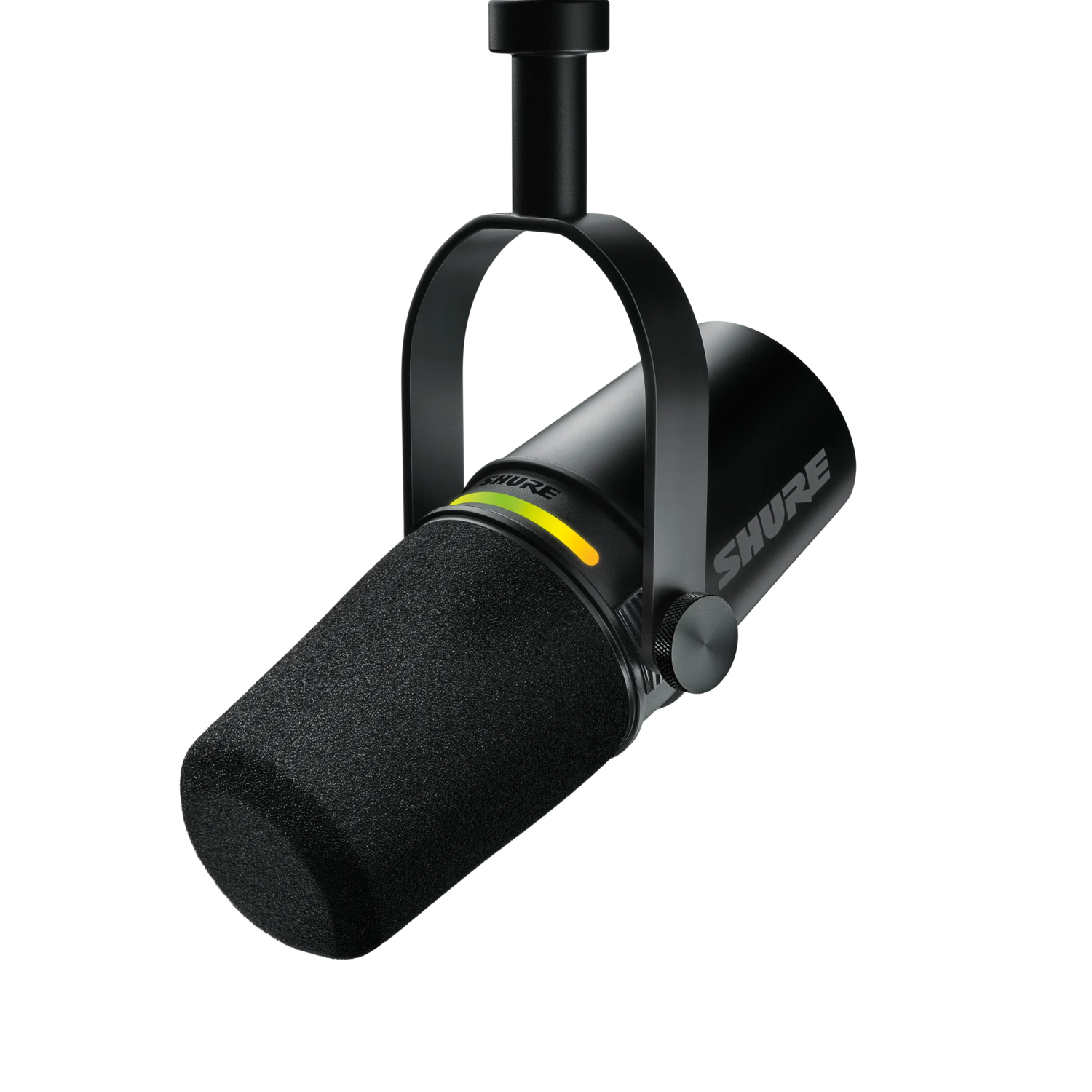
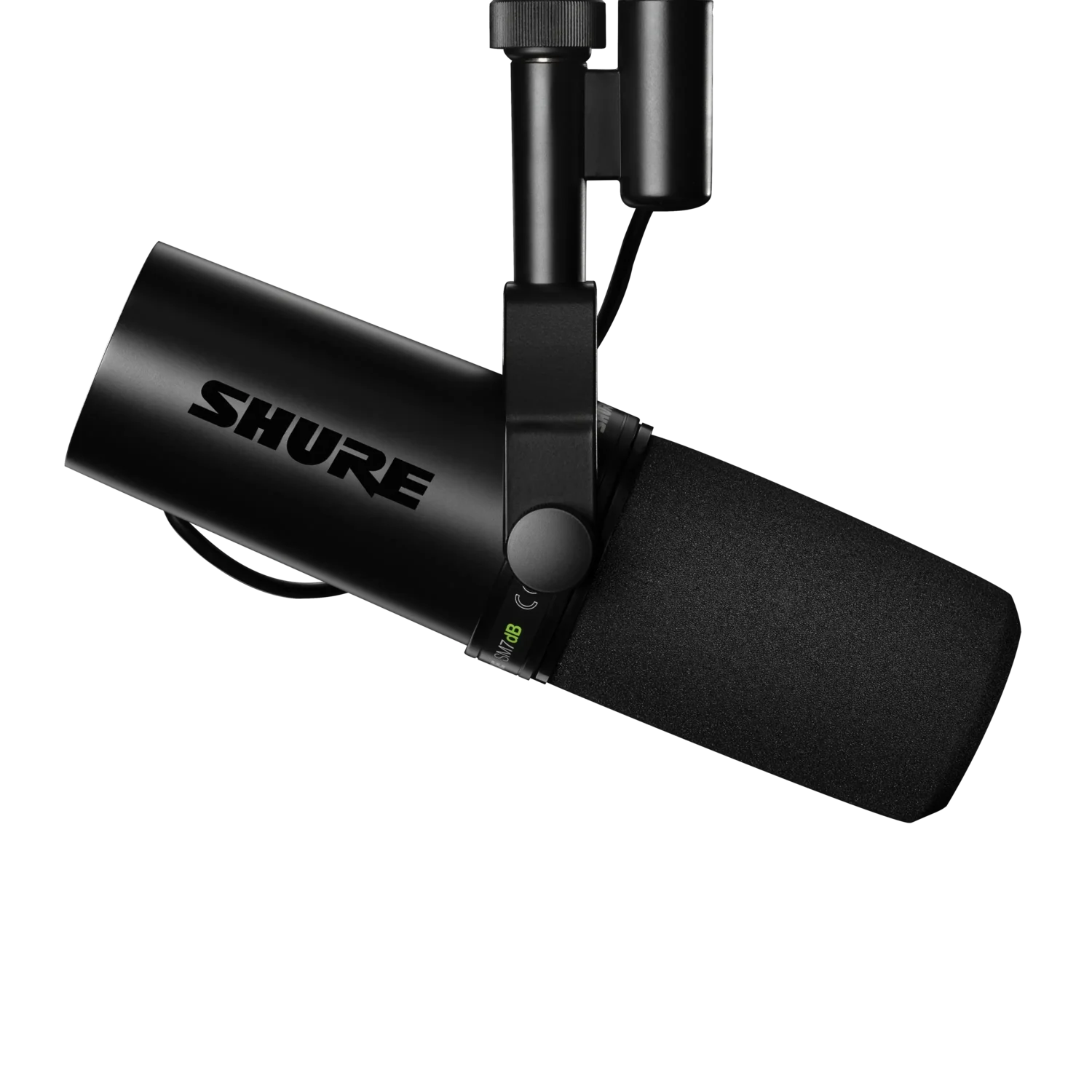
Shure SM7dB active broadcast XLR dynamic microphone with yoke mount and windscreen
Best Overall
Broadcast XLR Dynamic
9.1/10
Reference Broadcast
$549 MSRP
Needs XLR Interface + Boom Arm
Active Dynamic (moving coil)
Cardioid (end-address, 2–3 in)
3-pin Male XLR (+48V for preamp)50–20,000 Hz · -59 dBV/Pa (bypass)
Built-in +18 / +28 dB Preamp + True Bypass
Bass roll-off, Mid-range presence boost, Preamp & Bypass switches
Standard + A7WS close-talk windscreens, integrated yoke mountPro podcasts, radio broadcast, untreated rooms with any XLR interface
Shure MV7+ hybrid USB-C and XLR dynamic podcast microphone with multi-color LED touch strip
Best Hybrid
Hybrid USB-C & XLR Dynamic
8.9/10
Strongly Recommended
$279 MSRP
Plug-and-Play (Optional XLR Later)
Dynamic (Voice Isolation Tech)
Cardioid (end-address)
Dual USB-C + 3-pin XLR (simultaneous) + 3.5 mm jackVoice Isolation passive rejection · OBS Certified
Enhanced Auto Level, Real-time Denoiser, Digital Popper Stopper
Customizable multi-color LED touch mute/meter + MOTIV Mix app
USB-C cable, integrated yoke mount (stand/arm sold separately)Solo & co-host podcasters, Twitch streamers, creators growing into XLR
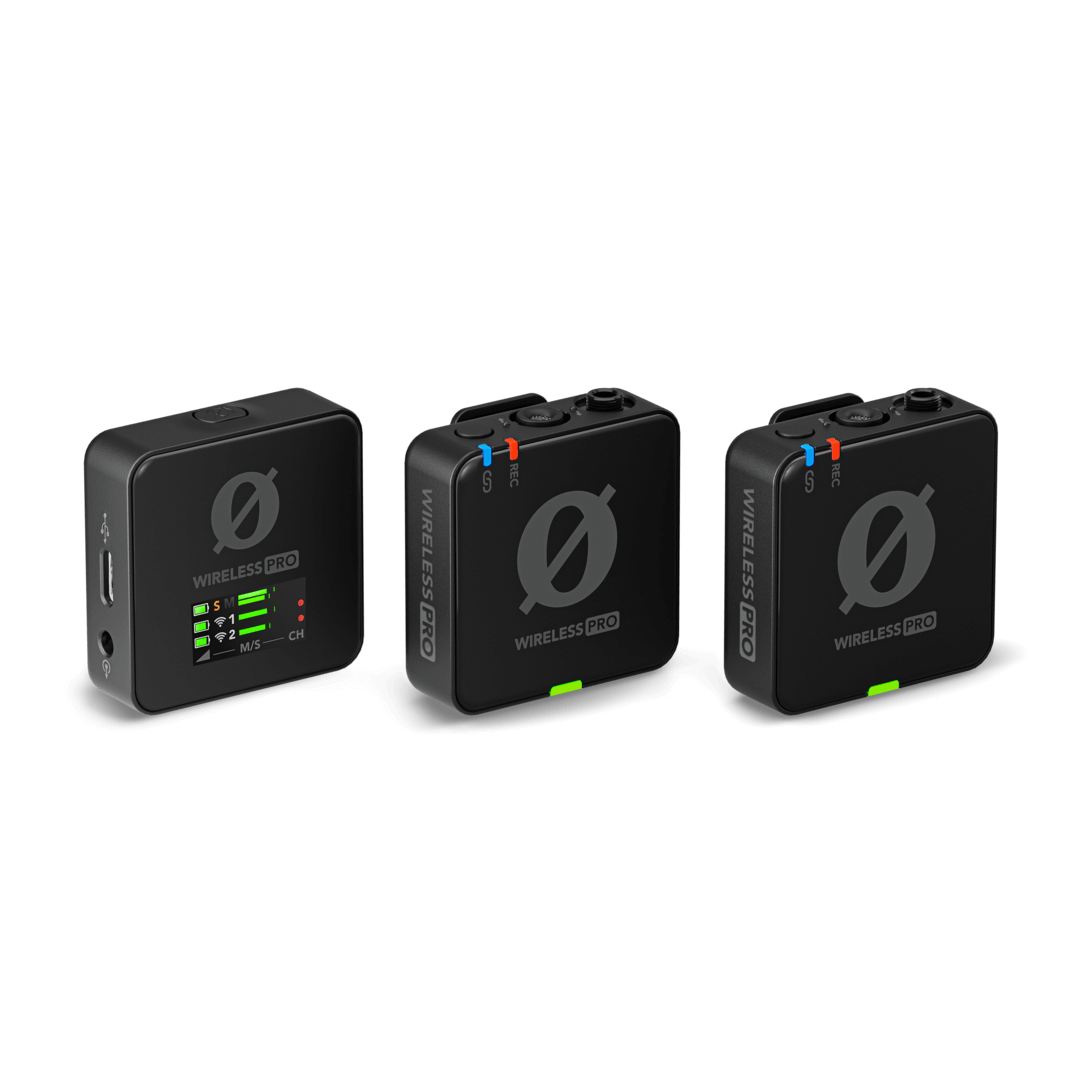
RØDE Wireless PRO dual-channel 2.4 GHz wireless receiver and two transmitters with LCD level display
Best Wireless Video
Pro Wireless Video System
8.8/10
Strongly Recommended
$399 MSRP
Complete 2-Person Camera Kit
Dual-Channel 2.4 GHz Wireless + 2× Lavalier II
Omnidirectional (on-TX & Lavalier II)
Locking 3.5 mm TRS, USB-C, Camera/Phone + Direct Connect Bluetooth (iOS)260 m Series IV 2.4 GHz (128-bit) · 32 GB / 40+ hr per TX
32-bit Float Onboard Recording + Timecode + GainAssist + Safety Channel
RX LCD + Headphone Vol, RØDE Central & RØDE Capture (iOS/Android/Mac/Win)
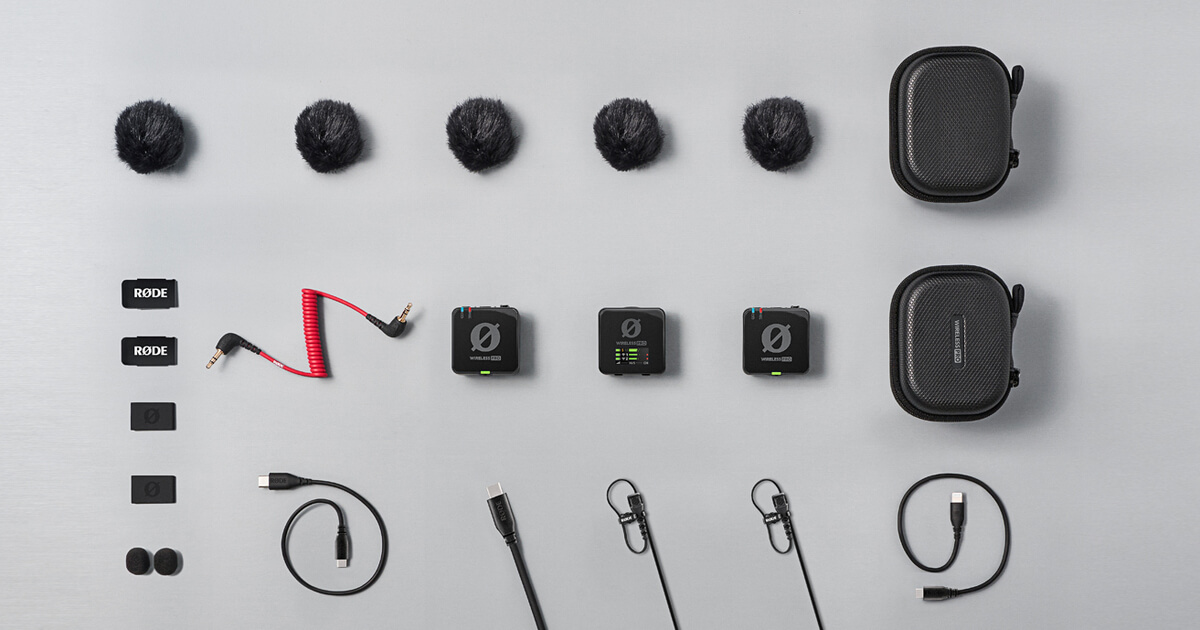
Smart Charge Case, 2× TX, 1× RX, 2× Lavalier II, MagClip GO, windshields & cablesYouTube filming, street interviews, weddings, multi-cam shoots & mobile journalism
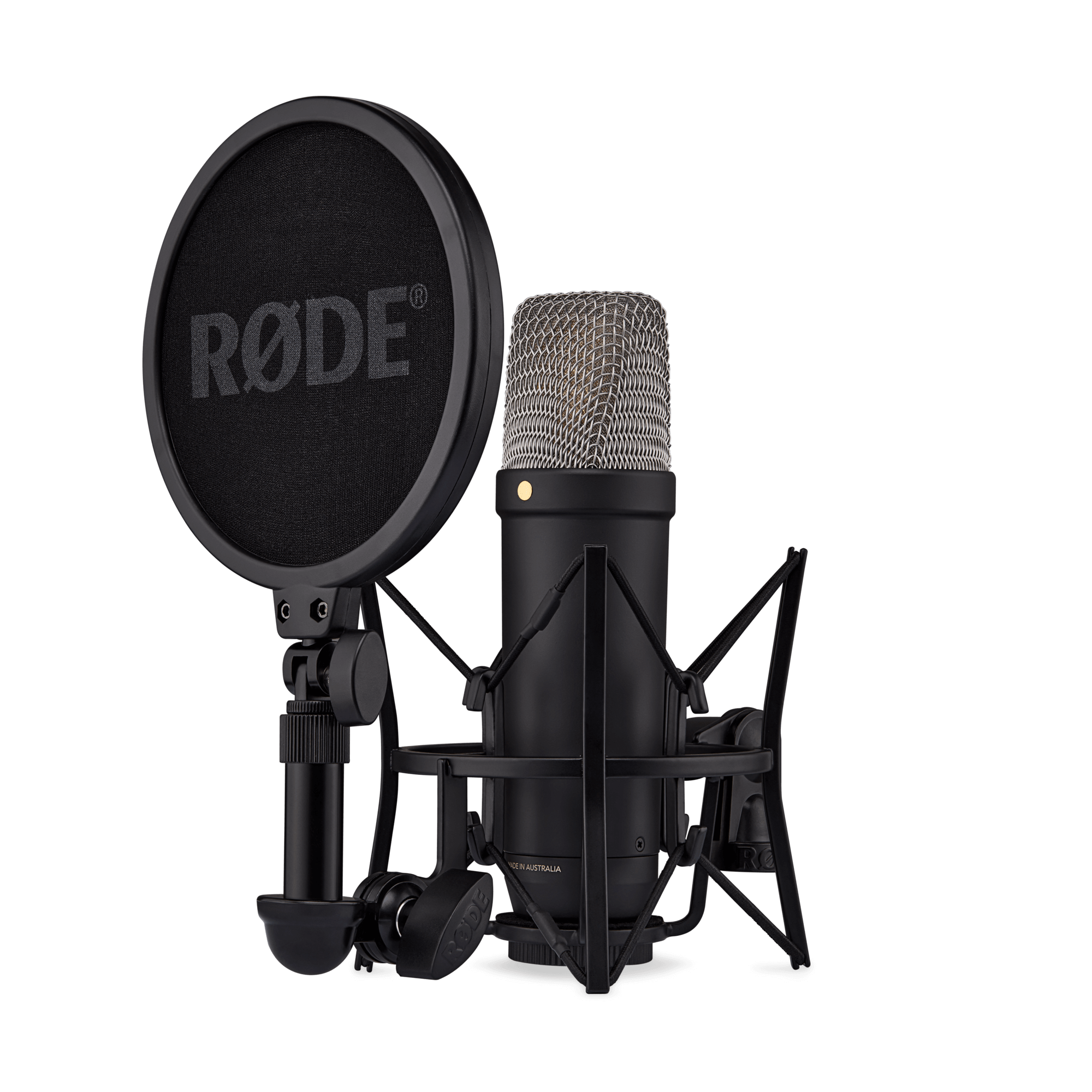
RØDE NT1 5th Generation black large-diaphragm studio condenser microphone with SM6 shock mount and pop filter
Best Studio Condenser
Studio Dual-Connect Condenser
8.6/10
Strongly Recommended
See RØDE US Store
Complete Studio Box (USB-C or XLR)
1-in HF6 Large-Diaphragm True Condenser
Cardioid (side-address, gold dot front)
Dual Connect XLR (+48V) & USB-C4 dBA self-noise (world's quietest studio condenser)
32-bit Float / 192 kHz A/D + Revolution Preamp + APHEX DSP
RØDE Central / RØDE Connect (VoxLab, HPF, Gate, Comp, Aural Exciter)
SM6 shock mount, pop filter, Neutrik/Canare XLR cable, USB-C cable, dust coverStudio singing, audiobooks/voiceover, acoustic guitar & piano in quiet rooms
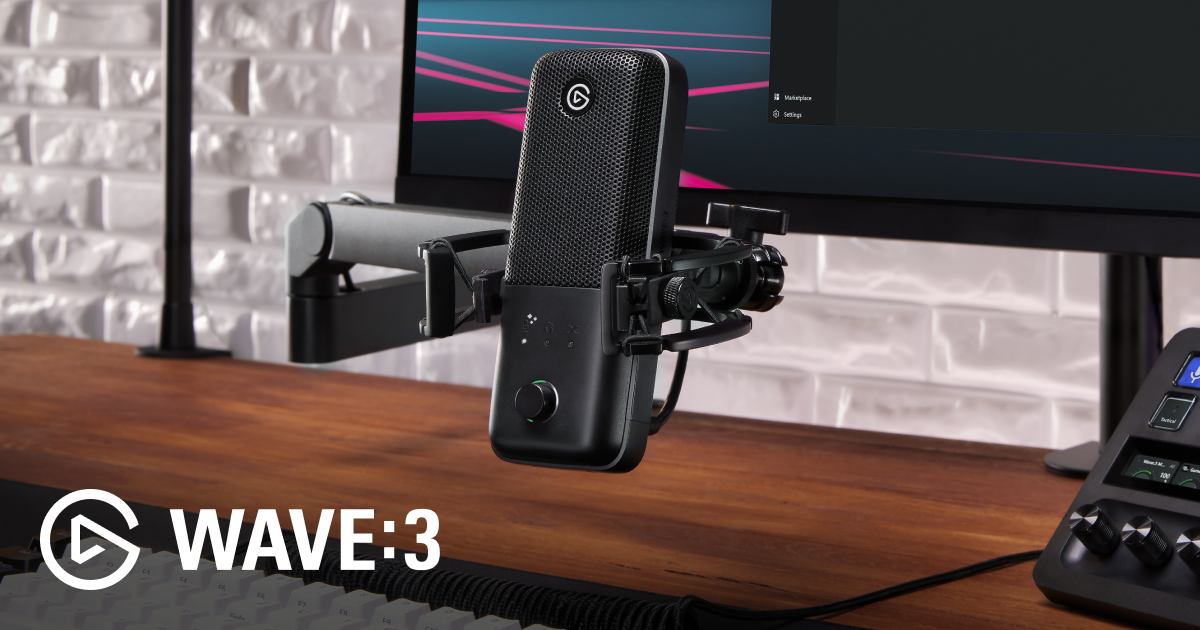
Elgato Wave:3 MK.2 USB-C streaming condenser microphone mounted on a desk boom arm with Stream Deck
Best for Streaming
Streaming USB-C Condenser
8.3/10
Specialist Pick
See Elgato US Store
Mic Only — Desk Stand Included
Side-Address Condenser Capsule
Cardioid (optimal 4–8 in / 10–20 cm)
USB-C (PC, Mac, tablet, mobile) + 3.5 mm headphone jackClipguard 2.0 hardware anti-clipping + Voice Focus
Onboard Wave FX Processor (DSP + universal VST Inserts)
Multifunction dial (Gain/Voice Tune/Vol/Mix), 5s Auto Gain, Tap-to-Mute, Wave Link 3.0
Built-in pop filter, desk stand, 1/4-in thread + 3/8 & 5/8-in adapters, USB-C cableTwitch/YouTube streamers, gamers, multi-source audio routing & Stream Deck rigs
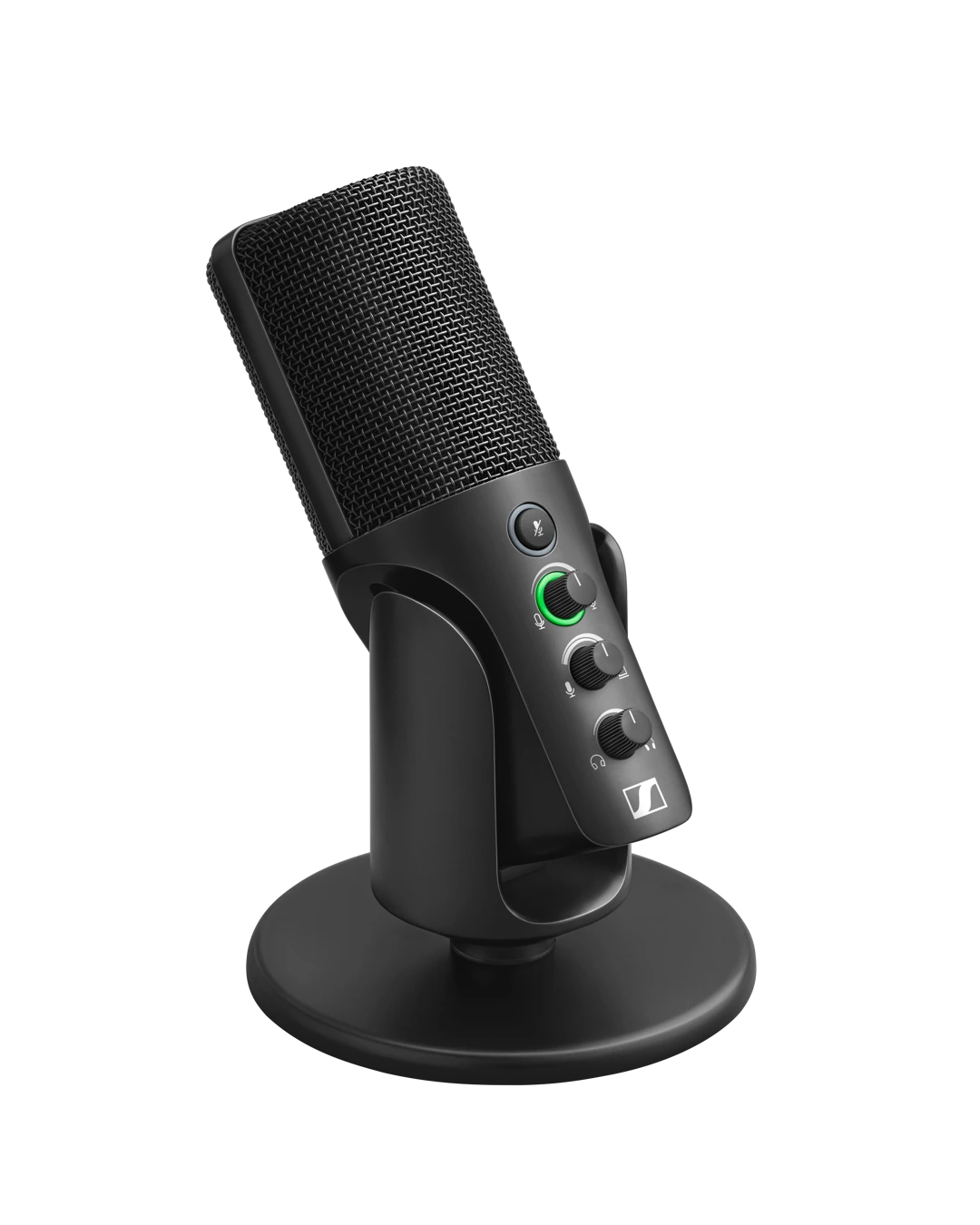
Sennheiser Profile USB cardioid condenser microphone on weighted desk base with tactile Gain, Mix, and Volume dials
Best Plug-and-Play
Plug-and-Play Desk Condenser
7.8/10
Practical Value
See Sennheiser US Store
Mic Only — Weighted Desk Stand Included
Pre-Polarized Condenser (German-engineered)
Cardioid
USB-C powered (macOS, iPadOS, Windows, Android) + 3.5 mm jack20–20,000 Hz · 125 dB Max SPL (min. gain)
Class-compliant USB-C hardware preamp (zero software needed)
Physical Gain (clip LED), Mix balance, Headphone Vol, soft-touch Mute LED
Self-locking tilt joint, weighted table stand, 1.2 m USB-C cableExecutive calls, fast desk podcasts, voiceovers & Mac/iPad creators avoiding apps

How MicBench Scores Microphones (Weighted 10-Point Lab Rubric)

Every microphone—whether $129 USB or $549 XLR—is graded on the exact same five weighted criteria so weaknesses actually show up in the final score.

Read Full Lab Methodology →
Vocal Quality & Acoustics30%
Room & Noise Handling25%
Workflow, DSP & Kit20%
I/O & Upgrade Path15%
Total-Rig Value10%
9.0 – 10.0 Reference Tier8.5 – 8.9 Strongly Recommended8.0 – 8.4 Specialist Pick7.5 – 7.9 Practical Value
MSRP Note: Fixed USD prices reflect verified US brand publications; bundle models link directly to official US stores.

In-Depth Lab Evaluations

Detailed Reviews & Verified Hardware Breakdowns

Every model is photographed on our studio showcase stage and evaluated across four acoustic and workflow dimensions—with verified manufacturer specifications and honest tradeoffs.

Browse All 6 Full Reviews →
Shure SM7dB active broadcast XLR dynamic microphone with yoke mount and windscreen
#1 · Editor's Choice — Best Overall Broadcast Mic
9.1/10

Shure SM7dB

Broadcast XLR Dynamic

$549 MSRP
Verified Shure USA MSRP

The legendary SM7B sound—finally free from the external inline preamp tax.

Shure solved the classic SM7B's biggest beginner trap by building a Cloudlifter-licensed active preamp directly inside the chassis. Flip between +18 dB and +28 dB of clean gain with +48V phantom power, or engage true Bypass for original passive SM7B performance on loud studio sources.

Freq. Response
50 – 20,000 Hz
Built-In Gain
+18 / +28 dB (+48V)
Polar Pattern
Cardioid Dynamic
Output
3-pin XLR (Active/Bypass)
5-Axis Weighted Lab BreakdownReference Broadcast
Vocal Quality & Acoustics(30%)9.6
Room & Noise Handling(25%)9.5
Workflow, DSP & Kit(20%)8.8
I/O & Upgrade Path(15%)8.8
Total-Rig Value(10%)7.2
Skip If: Skip if you don't own an XLR interface or heavy boom arm yet—total rig cost exceeds $700.
✓ Strengths
  • +Built-in +18 / +28 dB preamp pairs cleanly with entry-level interfaces—no Cloudlifter required
  • +True bypass restores classic passive SM7B (-59 dBV/Pa) behavior for snare drums & loud amps
  • +Tight cardioid dynamic rejection cuts HVAC rumble, room reverb, and mechanical keyboards
✕ Tradeoffs
  • −XLR-only: requires an interface/mixer with +48V phantom power plus an XLR cable and sturdy boom arm
  • −Demands close-mic technique (2–3 inches) to keep vocal fullness and noise rejection at peak
Best for: Pro podcasts, radio broadcast, untreated rooms with any XLR interface
Shure MV7+ hybrid USB-C and XLR dynamic podcast microphone with multi-color LED touch strip
#2 · Best Hybrid USB-C & XLR Podcast Mic
8.9/10

Shure MV7+

Hybrid USB-C & XLR Dynamic

$279 MSRP
Verified Shure USA MSRP

Start on USB-C with smart DSP today, scale to an XLR console tomorrow—or record both at once.

The MV7+ delivers SM7-inspired warm broadcast voicing in a compact, OBS-certified hybrid body. Over USB-C, its onboard Digital Popper Stopper, Real-time Denoiser, and Enhanced Auto Level Mode keep voices broadcast-ready in imperfect bedrooms, while simultaneous XLR output future-proofs your rig.

Connectivity
USB-C + XLR (Simultaneous)
Onboard DSP
Denoiser, Auto Level, Popper Stopper
Controls
LED Touch Mute / Meter
Monitoring
3.5 mm Live Headphone Out
5-Axis Weighted Lab BreakdownStrongly Recommended
Vocal Quality & Acoustics(30%)8.8
Room & Noise Handling(25%)9.0
Workflow, DSP & Kit(20%)9.0
I/O & Upgrade Path(15%)9.4
Total-Rig Value(10%)8.2
Skip If: Skip if you need ultra-detailed studio condenser sparkle for singing vocals or acoustic instruments.
✓ Strengths
  • +Records USB-C and XLR simultaneously—ideal for live streaming plus clean backup tracks
  • +Real-time Denoiser and Digital Popper Stopper rescue untreated desks without bulky foam
  • +Enhanced Auto Level Mode tracks distance and volume swings automatically
✕ Tradeoffs
  • −DSP effects, Auto Level Mode, and LED metering operate over USB-C only (not analog XLR)
  • −Base $279 box ships without a desktop stand or boom arm—budget an extra mount
Best for: Solo & co-host podcasters, Twitch streamers, creators growing into XLR
RØDE Wireless PRO dual-channel 2.4 GHz wireless receiver and two transmitters with LCD level display
#3 · Best Wireless Mic System for Video & Filmmaking
8.8/10

RØDE Wireless PRO

Pro Wireless Video System

$399 MSRP
Verified full kit incl. 2× Lavalier II & Charge Case

32-bit float backup, built-in Timecode, and two locking Lavalier II mics in one travel case.

For YouTubers, documentary shooters, and two-person interviews, Wireless PRO eliminates field audio anxiety. Each transmitter packs 32 GB of internal 32-bit float storage (40+ hours), pairs over encrypted Series IV 2.4 GHz up to 260 m, syncs multi-cam edits with Timecode, and connects directly to iOS over Bluetooth.

Wireless Range
Up to 260 m (Series IV)
Onboard Backup
32-bit Float · 32 GB (40+ h)
Pro Sync
Timecode + GainAssist
Included Lavs
2× Locking Lavalier II
5-Axis Weighted Lab BreakdownStrongly Recommended
Vocal Quality & Acoustics(30%)8.4
Room & Noise Handling(25%)8.6
Workflow, DSP & Kit(20%)9.7
I/O & Upgrade Path(15%)8.8
Total-Rig Value(10%)8.7
Skip If: Skip if you only record seated at a desk—a wired broadcast dynamic or studio condenser gives fuller vocal weight.
✓ Strengths
  • +32-bit float internal recording (32 GB / 40+ hours per TX) saves audio even if wireless drops or clips
  • +Built-in Timecode generator keeps multi-camera shoots frame-accurate in Premiere and DaVinci Resolve
  • +Ships with two locking 3.5 mm Lavalier II mics, MagClip GO magnets, windshields, and smart charge case
✕ Tradeoffs
  • −$399 kit is overkill if you only film casual single-person desk clips and never use lavs or Timecode
  • −Like all 2.4 GHz systems, human body obstruction reduces real-world range—always engage internal recording
Best for: YouTube filming, street interviews, weddings, multi-cam shoots & mobile journalism
RØDE NT1 5th Generation black large-diaphragm studio condenser microphone with SM6 shock mount and pop filter
#4 · Best Studio Condenser for Vocals & Voiceover
8.6/10

RØDE NT1 5th Generation

Studio Dual-Connect Condenser

See RØDE US Store
Includes SM6 shock mount, pop filter & both cables

4 dBA self-noise meets unclippable 32-bit float USB-C and classic XLR in one full studio bundle.

RØDE re-engineered its iconic 1-inch HF6 studio condenser with a patent-pending Dual Connect socket (XLR + USB-C) and a world-first 32-bit float / 192 kHz digital output. At just 4 dBA self-noise—and bundled with the SM6 shock mount, pop filter, and Neutrik/Canare XLR cable—it is the benchmark for vocals, audiobooks, and acoustic instruments.

Self-Noise
4 dBA (Ultra-Quiet)
Digital Audio
32-bit Float / 192 kHz
Connectivity
Dual Connect XLR + USB-C
Included Kit
SM6 Mount + Pop Filter + Cables
5-Axis Weighted Lab BreakdownStrongly Recommended
Vocal Quality & Acoustics(30%)9.7
Room & Noise Handling(25%)6.6
Workflow, DSP & Kit(20%)9.2
I/O & Upgrade Path(15%)9.0
Total-Rig Value(10%)8.5
Skip If: Skip if you record in an echoey bedroom next to a loud PC fan or HVAC vent—this sensitive condenser captures room noise.
✓ Strengths
  • +4 dBA self-noise preserves whisper-quiet vocal nuances and ACX audiobook silence specs
  • +32-bit float USB-C recording lets you recover screamed peaks or soft passages cleanly in post
  • +Supports up to 8 NT1 5th Gen mics simultaneously via macOS Aggregate or Windows ASIO driver
✕ Tradeoffs
  • −No built-in 3.5 mm headphone jack on the mic body (monitor via computer or XLR interface)
  • −High condenser sensitivity picks up room reflections and fans—best in treated or quiet spaces
Best for: Studio singing, audiobooks/voiceover, acoustic guitar & piano in quiet rooms
Elgato Wave:3 MK.2 USB-C streaming condenser microphone mounted on a desk boom arm with Stream Deck
#5 · Best USB Condenser for Streaming & Gaming
8.3/10

Elgato Wave:3 MK.2

Streaming USB-C Condenser

See Elgato US Store
Includes Wave Link 3.0 & boom adapters

Hardware Clipguard 2.0, onboard Wave FX DSP, and Wave Link 3.0 make live audio routing effortless.

Wave:3 MK.2 upgrades Elgato's streamer favorite with an onboard Wave FX Processor that runs EQ, compression, Clipguard 2.0, and universal VST Inserts in one low-latency signal path. Add the 5-second Auto Gain wizard, Voice Focus room cleanup, and Stream Deck integration, and it dominates multi-app live workflows.

Anti-Clipping
Clipguard 2.0 Hardware
DSP Engine
Wave FX + VST Inserts
Setup
5-Sec Auto Gain Wizard
Mixer
Wave Link 3.0 + 3.5 mm Out
5-Axis Weighted Lab BreakdownSpecialist Pick
Vocal Quality & Acoustics(30%)8.5
Room & Noise Handling(25%)7.4
Workflow, DSP & Kit(20%)9.6
I/O & Upgrade Path(15%)7.2
Total-Rig Value(10%)8.8
Skip If: Skip if you plan to move to an analog XLR mixer/interface or record in a noisy, echo-heavy room.
✓ Strengths
  • +Clipguard 2.0 prevents sudden shout or laugh clipping at the hardware level during live streams
  • +Wave FX Processor applies onboard EQ, compression, and VST Inserts across Discord, OBS, and Zoom
  • +5-second push-and-hold Auto Gain wizard dials in safe vocal levels without manual guesswork
✕ Tradeoffs
  • −USB-C only with no analog XLR port if you later migrate to a multi-mic hardware mixer
  • −Unlocks full multi-channel routing and Voice Focus potential only when paired with Wave Link
Best for: Twitch/YouTube streamers, gamers, multi-source audio routing & Stream Deck rigs
Sennheiser Profile USB cardioid condenser microphone on weighted desk base with tactile Gain, Mix, and Volume dials
#6 · Best Plug-and-Play Desk Mic (No Software Required)
7.8/10

Sennheiser Profile USB Microphone

Plug-and-Play Desk Condenser

See Sennheiser US Store
Includes metal desk stand & 1.2 m USB-C cable

Full 20–20,000 Hz condenser clarity and tactile metal controls—zero apps or drivers required.

Built for creators and remote professionals who refuse to run heavy background audio suites. Sennheiser puts dedicated physical dials for Gain (with clip LED ring), Mic/Device Mix, Headphone Volume, and soft-touch Mute right on a compact Ø 50 × 152 mm metal body with 125 dB max SPL handling.

Freq. Response
20 – 20,000 Hz
Max SPL
125 dB SPL (min. gain)
Controls
Gain, Mix, Vol & Mute LEDs
Dimensions
Ø 50 × 152 mm Metal Body
5-Axis Weighted Lab BreakdownPractical Value
Vocal Quality & Acoustics(30%)8.3
Room & Noise Handling(25%)7.4
Workflow, DSP & Kit(20%)7.8
I/O & Upgrade Path(15%)6.4
Total-Rig Value(10%)9.2
Skip If: Skip if you want onboard anti-clipping DSP, software EQ/denoising, or a future XLR upgrade path.
✓ Strengths
  • +Truly driverless and app-free across macOS, Windows, iPadOS, and Android—plug in and record
  • +Dedicated front-panel Mix dial balances live voice monitoring against computer audio instantly
  • +Full 20–20,000 Hz range and 125 dB max SPL capture articulate speech without harsh distortion
✕ Tradeoffs
  • −No onboard DSP noise gate, EQ, or compressor if your room has constant fan or traffic noise
  • −USB-C only; desk stand picks up keyboard bumps unless isolated or mounted on a boom arm
Best for: Executive calls, fast desk podcasts, voiceovers & Mac/iPad creators avoiding apps

Audio Engineer's Buying Guide

How to Choose the Right Microphone for Your Room & Workflow

Most North American creators overspend on the wrong capsule type—buying a hypersensitive condenser for an echoey drywall bedroom, or an under-powered XLR dynamic without a clean preamp. Start with your environment below.

Full Buying Guide & Spec Glossary →
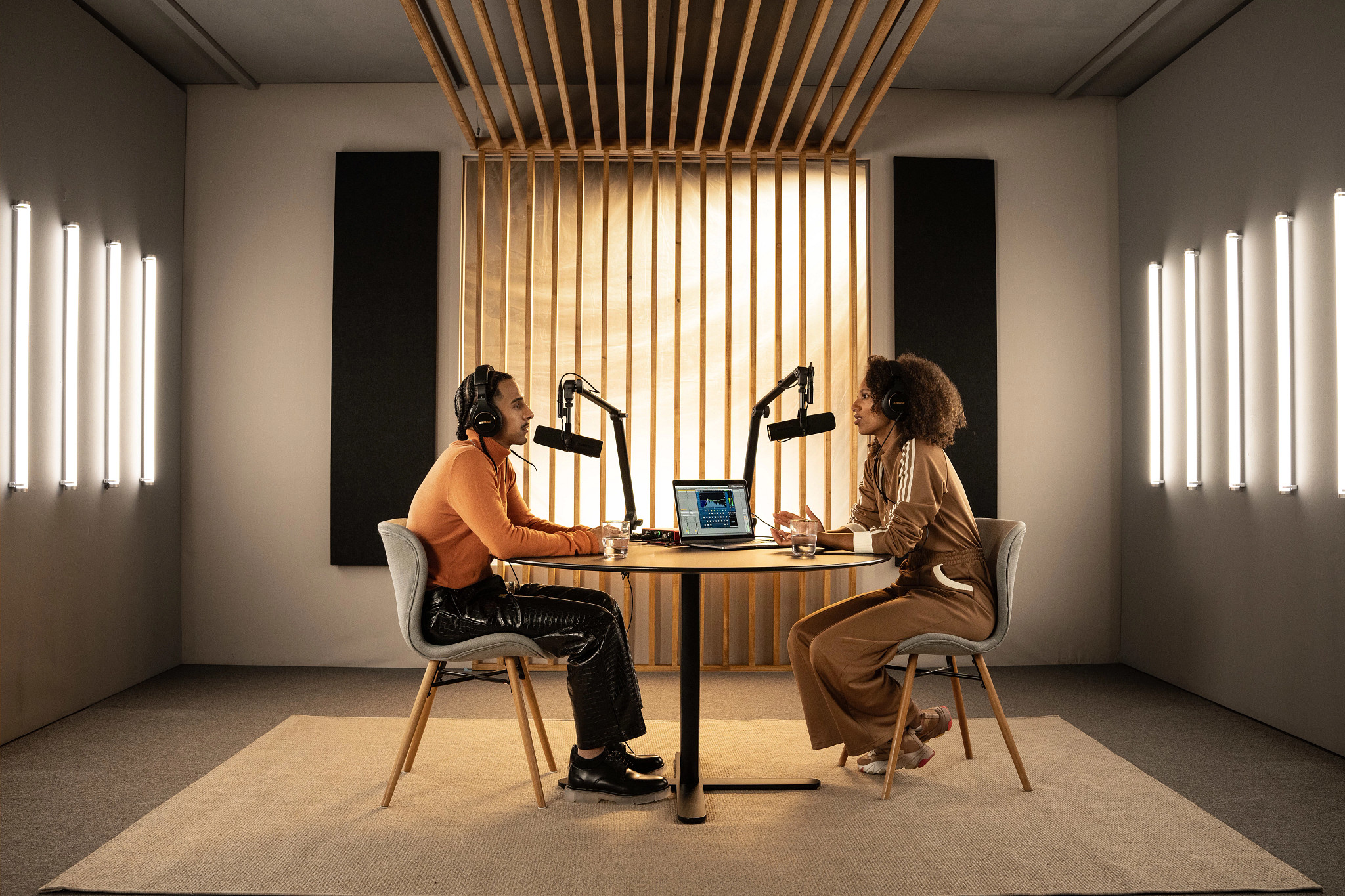
Two podcast hosts recording in a warm wood-slat acoustic studio with Shure SM7dB broadcast microphones
Room Type 01 · Untreated / Broadcast Desk

Choose a Cardioid Dynamic (2–3 in)

Hard drywall, air conditioning, or a PC tower next to your desk? Dynamic mics like the Shure SM7dB and MV7+ reject ambient room echo naturally.

Match: Shure SM7dB · Shure MV7+
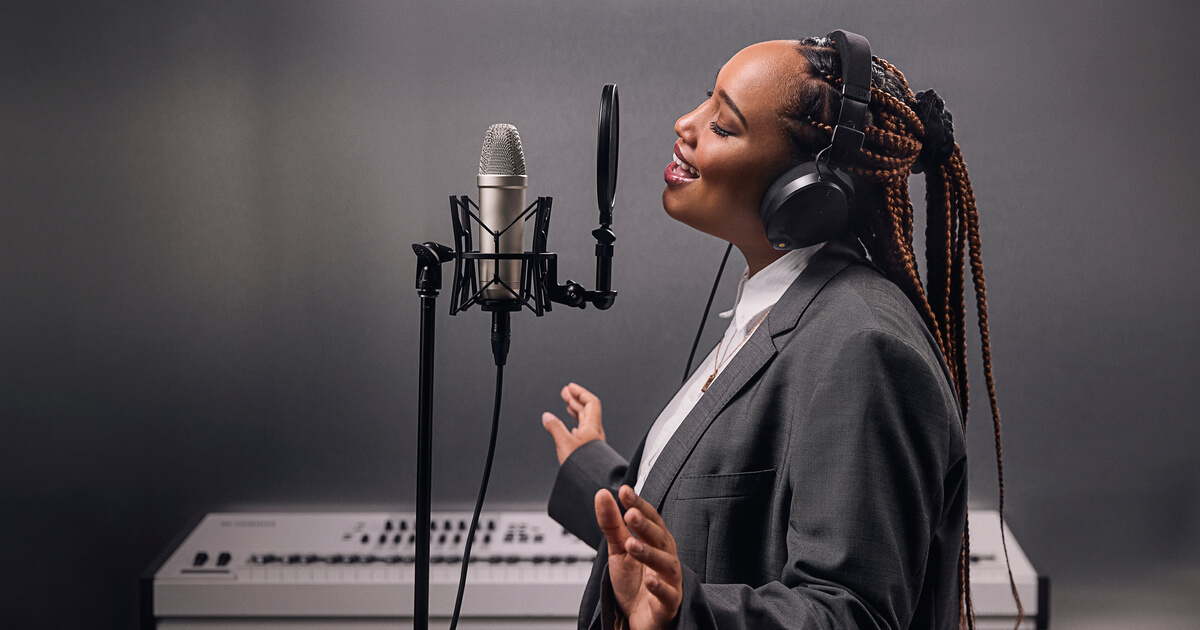
Vocalist recording with a RØDE NT1 5th Generation large-diaphragm studio condenser microphone and pop shield
Room Type 02 · Quiet / Treated Studio

Unlock Condenser Detail (4–8 in)

In a quiet or softly furnished room, a large-diaphragm condenser like the RØDE NT1 5th Gen (4 dBA self-noise) captures silky top-end clarity.

Match: RØDE NT1 5th Gen · Wave:3 MK.2 · Profile USB
RØDE Wireless PRO dual-channel 2.4 GHz wireless microphone system for video production
Room Type 03 · Video & Multi-Cam Set

Run Dual-Channel Wireless + 32-Bit Backup

When presenters move on camera or shoot outdoors, clip-on transmitters with onboard 32-bit float storage and Timecode eliminate ruined takes.

Match: RØDE Wireless PRO ($399 Full Kit)

1. Instant Pick by Creator Workflow

Pro Podcasting & Broadcast Radio

Space: Home studio or dedicated booth with XLR interface

Shure SM7dB active broadcast XLR dynamic microphone with yoke mount and windscreen
Recommended PickShure SM7dB
Review

Classic 50–20,000 Hz broadcast warmth plus a built-in +18 / +28 dB preamp that drives cleanly into any +48V interface without an external Cloudlifter.

Alternative: Shure MV7+ ($279) if you want half the cost and USB-C flexibility

Solo Podcasting & Co-Host Growth Rig

Space: Untreated bedroom, living room, or apartment desk

Shure MV7+ hybrid USB-C and XLR dynamic podcast microphone with multi-color LED touch strip
Recommended PickShure MV7+
Review

Voice Isolation dynamic capsule + Real-time Denoiser and Digital Popper Stopper tame echo and fans today over USB-C, with XLR ready when you add a multi-mic mixer.

Alternative: Shure SM7dB if you already own a +48V XLR interface

Studio Vocals, Audiobooks & Acoustic Music

Space: Quiet bedroom closet, treated room, or project studio

4 dBA self-noise passes strict audiobook noise-floor standards, 32-bit float / 192 kHz prevents clipped vocal takes, and the SM6 shock mount + pop filter come in the box.

Alternative: Shure SM7dB (Bypass mode) for loud rock vocals or untreated rooms

Twitch / YouTube Live Streaming & Gaming

Space: Dual-monitor PC desk with mechanical keyboard & chat audio

Elgato Wave:3 MK.2 USB-C streaming condenser microphone mounted on a desk boom arm with Stream Deck
Recommended PickElgato Wave:3 MK.2
Review

Clipguard 2.0 stops loud reactions from distorting, Wave FX runs universal VST Inserts across Discord and OBS, and Wave Link 3.0 handles multi-channel stream mixing.

Alternative: Shure MV7+ if your PC fans are loud and you prefer a dynamic capsule

Zero-Software Calls, Narration & Clean Desk

Space: MacBook / Windows / iPad workstation with zero bloatware policy

Class-compliant USB-C with physical Gain, Mix, Headphone Volume, and Mute LEDs right on the metal body—plus 20–20,000 Hz range and 125 dB max SPL.

Alternative: Elgato Wave:3 MK.2 if you later want virtual mixing & VST plugins

YouTube Filming, Street Interviews & Documentaries

Space: On-camera shoots, outdoor wind, two hosts, multi-cam edits

RØDE Wireless PRO dual-channel 2.4 GHz wireless receiver and two transmitters with LCD level display
Recommended PickRØDE Wireless PRO
Review

32-bit float onboard backup (32 GB / 40+ hr per TX), Timecode sync, intelligent GainAssist, and two locking Lavalier II mics make it a complete field audio kit.

Alternative: Shure MV7+ for seated desk commentary instead of run-and-gun filming

2. Four Technical Decisions That Actually Change Your Sound

01

Dynamic vs. Condenser: Match the Capsule to Your Room

Room acoustics—not microphone price—cause 80% of amateur audio complaints in North American apartments and home offices.

  • Choose a Cardioid Dynamic (Shure SM7dB, Shure MV7+) if you record near bare drywall, HVAC vents, street traffic, or a gaming PC. Dynamics work best 2–4 inches from your mouth and naturally roll off distant room reverb.
  • Choose a Cardioid Condenser (RØDE NT1 5th Gen, Elgato Wave:3 MK.2, Sennheiser Profile USB) if your room is quiet or softly furnished (rugs, curtains, bookshelves) and you want airy high-frequency vocal detail or 4–8 inch working distance.
  • Avoid omnidirectional desk mics for solo speech unless you are specifically using a clip-on wireless transmitter (like RØDE Wireless PRO) placed close to the chest.
02

USB-C vs. XLR vs. Dual-Connect Upgrade Paths

Pick your connector based on how many people speak in the same room and whether you already own an audio interface.

  • Pure USB-C (Elgato Wave:3 MK.2, Sennheiser Profile USB) gives the fastest single-cable desk setup and includes built-in headphone monitoring—ideal for solo streamers and remote pros.
  • Dual-Connect USB-C + XLR (Shure MV7+, RØDE NT1 5th Gen) is the smartest hedge for growing creators: start on USB-C immediately, then plug into a multi-mic XLR interface or mixer later without replacing your mic.
  • Pure XLR (Shure SM7dB) delivers maximum durability, zero driver headaches, and multi-host scaling, provided you pair it with an XLR interface supplying +48V phantom power.
03

Preamp Gain, 32-Bit Float & Clipguard 2.0 Explained

Two engineering breakthroughs in 2024–2026 solved the oldest beginner audio disasters: weak gain hiss and ruined clipped peaks.

  • Low-output broadcast dynamics traditionally needed ~60 dB of clean preamp gain. The Shure SM7dB solves this internally with +18 dB or +28 dB of clean phantom-powered gain—saving $100+ over buying an SM7B plus a separate inline booster.
  • 32-bit float recording (RØDE NT1 5th Gen via USB-C and RØDE Wireless PRO onboard) captures such massive dynamic headroom that shouted peaks and whispered lines can be restored cleanly in post without digital clipping.
  • Hardware anti-clipping (Elgato Clipguard 2.0) and Auto Level Mode (Shure MV7+) protect live Twitch/Zoom broadcasts in real time where you do not have a post-production second chance.
04

Hidden Setup Costs, Mounting & Positioning Checklist

Factor in mounts, cables, and distance before comparing sticker prices.

  • Boom Arm Load & Threading: Broadcast dynamics like the SM7dB need a rigid broadcast boom arm; lightweight desk springs sag over time. Check for 5/8-inch and 3/8-inch adapters (included on Wave:3 MK.2 and NT1 SM6).
  • Watch What's in the Box: RØDE NT1 5th Gen includes the SM6 shock mount, pop filter, XLR cable, and USB-C cable; Shure MV7+ ($279 base) does NOT include a stand or boom arm.
  • Distance Rule: Speak 2–3 inches off-axis into end-address dynamics (SM7dB, MV7+) and 4–8 inches into the front side of side-address condensers (NT1 5th Gen gold dot, Wave:3 MK.2 front grille).
  • Windows 32-Bit Float Note: On Windows PCs, install RØDE's free custom ASIO driver to unlock 32-bit float recording in your DAW with the NT1 5th Gen.
Creator desk audio recording setup showing microphone placement and acoustic environment

Lab Field Notes

4 Expensive Buying Traps to Avoid

✕ Buying an SM7B + External Booster Instead of Pricing Out the SM7dB

Do this instead: An SM7B ($399) plus a quality inline preamp and extra XLR jumper cable often matches or exceeds the Shure SM7dB ($549)—while adding extra connectors and cable clutter. Go straight to the SM7dB unless you already own a high-gain console.

✕ Placing a Sensitive Condenser 18 Inches Away in a Bare Room

Do this instead: Even the 4 dBA RØDE NT1 5th Gen will sound hollow if placed across your desk in an echoey room. Keep condensers 4–8 inches from your mouth on a boom arm, or switch to a dynamic mic like the Shure MV7+.

✕ Relying Only on 2.4 GHz Wireless Without Onboard 32-Bit Float Backup

Do this instead: 2.4 GHz signals attenuate sharply when talent turns their back to the camera. Always trigger internal 32-bit float recording on the RØDE Wireless PRO transmitters for paid shoots and irreplaceable interviews.

✕ Forgetting XLR Accessories When Comparing Sticker Prices

Do this instead: An XLR mic requires an audio interface (+48V phantom power for condensers and SM7dB), an XLR cable, and a stand or boom arm. Compare total rig cost—not just the bare microphone MSRP.

Buyer Q&A

Frequently Asked Questions

Direct answers on preamps, room acoustics, dual outputs, and verified US pricing.

Do I still need a Cloudlifter or FetHead with the Shure SM7dB?+

No. The Shure SM7dB builds a Shure-designed preamp (licensed from Cloud Microphones) directly into the microphone, delivering switchable +18 dB or +28 dB of clean gain as long as your audio interface provides standard +48V phantom power. You can also switch it to Bypass for classic passive SM7B operation.

Which microphone is best for an untreated North American bedroom or home office?+

Start with a cardioid dynamic microphone placed 2–4 inches from your mouth. The Shure MV7+ ($279 MSRP) is the easiest all-in-one pick thanks to USB-C connectivity, Voice Isolation, and its Real-time Denoiser. If you already own an XLR interface and want top broadcast tone, choose the Shure SM7dB ($549 MSRP).

Does the RØDE NT1 5th Generation work without an audio interface?+

Yes. Thanks to RØDE's Dual Connect socket, you can plug the NT1 5th Generation straight into your Mac or PC via USB-C and record up to 32-bit float / 192 kHz with APHEX DSP—no interface required. Just note that it has no onboard 3.5 mm headphone jack, so USB monitoring routes through your computer.

Should a streamer choose the Elgato Wave:3 MK.2 or the Sennheiser Profile USB?+

Choose the Elgato Wave:3 MK.2 if you stream on Twitch or YouTube and want Clipguard 2.0 anti-clipping, onboard Wave FX DSP, VST Inserts across apps, and Wave Link 3.0 multi-channel mixing. Choose the Sennheiser Profile USB if you want zero background software and prefer physical metal Gain, Mix, Volume, and Mute controls right on the mic.

Can the Shure MV7+ output USB-C and XLR at the same time?+

Yes. Shure confirms you can run both the USB-C and 3-pin XLR outputs simultaneously—handy when sending processed USB audio to a live stream while recording a clean backup track to an XLR recorder or mixer.

Why are some USD prices listed as 'See Official US Store' instead of a fixed dollar amount?+

MicBench only publishes exact US MSRP numbers verified directly from official manufacturer US documentation during our latest audit (Shure SM7dB at $549, Shure MV7+ at $279, RØDE Wireless PRO at $399). For models whose US product pages dynamically price regional bundles or seasonal promotions, we link directly to the official US product page rather than guessing a figure.

Need a Head-to-Head Breakdown Before You Order?

Compare the Shure SM7dB vs. MV7+, RØDE NT1 5th Gen vs. Elgato Wave:3 MK.2, and desktop mics vs. wireless kits in our dedicated comparison lab.